
How to Prevent Everyday Carpet Stains
Carpet stains have a way of showing up at the worst possible time a coffee spill before guests arrive, a muddy paw print right after cleaning day, a dropped glass of wine during dinner. The good news is that most everyday carpet stains are preventable. With a few simple habits and the right setup, you can stop spills and dirt from ever becoming permanent marks. This guide walks through practical, low-effort ways to keep your carpet stain-free for longer.
Why Carpets Stain So Easily
Carpet fibers are designed to be soft and absorbent, which is great underfoot but not so great when something spills. Natural fibers like wool soak up liquid quickly, while synthetic fibers such as nylon or polyester are more resistant but still vulnerable once a spill sits for more than a few minutes. The longer a liquid or substance stays on the surface, the deeper it works into the fibers and backing, which is why prevention and fast action when accidents happen matters so much more than trying to scrub out a stain after it’s set.
Set Up Preventive Barriers
The easiest way to prevent stains is to stop dirt and spills from reaching your carpet in the first place.
- Use entryway mats. Placing mats at every entrance catches dirt, moisture, and debris before it’s tracked further into the house. A simple “shoes-off” policy at the door can cut down on ground-in dirt significantly.
- Apply a carpet stain protector. Fiber sealants create a protective barrier that keeps liquids from soaking in immediately, giving you extra time to blot up spills before they set.
- Add area rugs in high-traffic zones. Hallways, entryways, and spots in front of couches or dining tables see the most wear and the most spills. A rug there protects the carpet underneath and is far easier to clean or replace.
Daily and Weekly Habits That Prevent Stains
Small, consistent habits do more to protect your carpet than any one-time treatment.
- Vacuum on a regular schedule. Dirt and grit act like sandpaper on carpet fibers and mix with moisture to create stains. Vacuuming high-traffic areas two to three times a week and the whole carpet at least weekly keeps grit from building up.
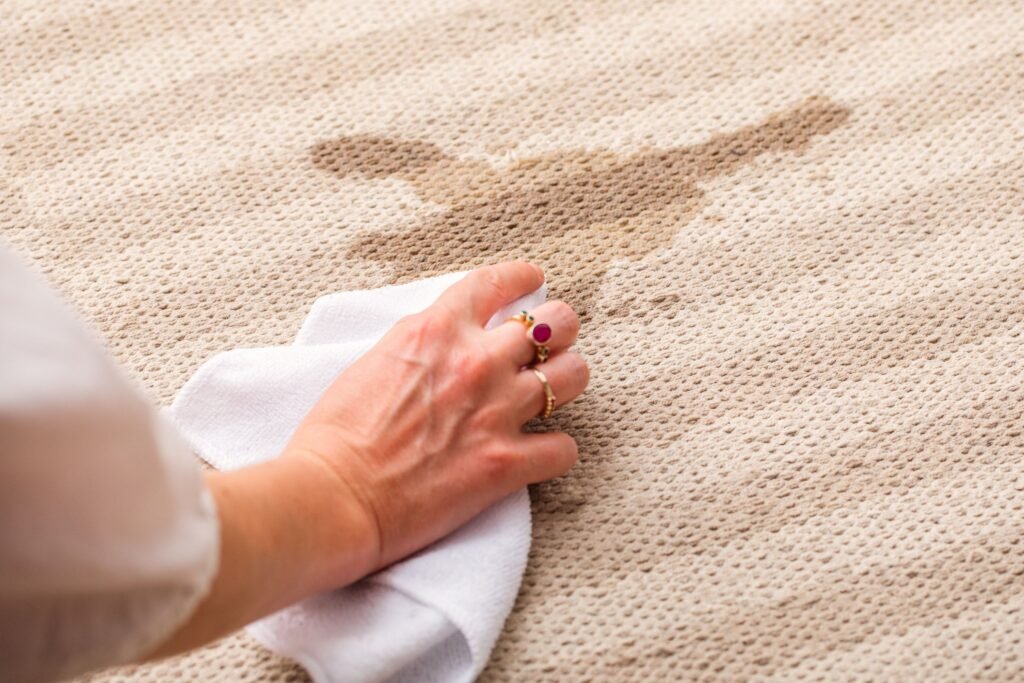
- Blot, don’t rub. If something spills, blot it immediately with a clean cloth instead of rubbing, which pushes the stain deeper into the fibers and spreads it.
- Keep a stain-response kit on hand. A few clean cloths, a mild dish detergent, and cold water are usually enough to handle a fresh spill before it sets. Keeping these within easy reach means you can react in seconds rather than minutes.
Handling Common Everyday Culprits
Different substances need slightly different first-response approaches:
- Food and drink spills (coffee, wine, juice): Blot immediately, working from the outside of the spill inward to avoid spreading it.
- Pet accidents: Clean up as soon as possible with an enzyme-based cleaner, which breaks down the proteins that cause both stains and odor.
- Mud and outdoor tracking: Let mud dry completely, then vacuum it up rather than trying to wipe it while wet, which just smears it into the fibers.
- Ink, makeup, and other household items: These often need a specific solvent rather than water, so it’s worth keeping a small stain-treatment guide or product on hand for these less common spills.
Protect Furniture and High-Risk Areas
Stains don’t only come from spills everyday wear contributes too.
- Use furniture coasters or pads under table and chair legs to prevent dye transfer and indentation marks over time.
- Pay extra attention to carpet near kitchens, entryways, and pet feeding areas, since these zones see the most exposure to moisture, food, and dirt.
Professional Maintenance as Prevention
Even with the best daily habits, carpets benefit from periodic deep cleaning. Professional cleaning removes embedded soil and residue that vacuuming alone can’t reach, which helps prevent the buildup that makes carpets more prone to staining in the first place. Most homes do well with a professional cleaning every 12 to 18 months, though homes with pets or kids may benefit from a more frequent schedule.
Quick-Reference Checklist
- Use entryway mats and consider a shoes-off policy
- Apply a carpet stain protector or fiber sealant
- Vacuum high-traffic areas several times a week
- Blot spills immediately never rub
- Keep a stain-response kit within reach
- Use enzyme cleaner for pet accidents
- Let mud dry before vacuuming
- Add furniture pads to prevent dye transfer
- Schedule professional deep cleaning periodically
Final Thoughts
Preventing carpet stains comes down to reducing exposure and reacting quickly when accidents happen. A few minutes of daily habit-building mats at the door, quick blotting, regular vacuuming will save you hours of scrubbing later. And when stains do happen despite your best efforts, having a plan (or a professional cleaner) ready makes all the difference. If your sofa and upholstery could use the same care, you can book a professional sofa cleaning to keep the rest of your home just as fresh.
Frequently Asked Questions
How often should I treat my carpet to prevent stains?
A fiber protector treatment typically lasts 12–18 months, though high-traffic areas may need more frequent reapplication.
Does carpet stain protector really work?
Yes it doesn’t make carpet stain-proof, but it slows down absorption, giving you critical extra time to blot up a spill before it sets in.
What’s the best way to blot a fresh spill?
Press a clean, dry cloth straight down onto the spill and lift, repeating with a fresh section of cloth. Avoid rubbing or scrubbing, which spreads the stain and pushes it deeper.
Can vacuuming really prevent stains?
Yes. Grit and dirt in carpet fibers mix with moisture to create stains that are harder to remove. Regular vacuuming keeps that buildup from accumulating.
Ready to Book a Professional Clean?
Get an instant estimate online — our team confirms every booking on WhatsApp.
Book Now